The debate between Generative Engine Optimisation (GEO) and Pay-Per-Click (PPC) advertising has intensified as UK businesses face unprecedented pressure to maintain visibility in an increasingly complex digital landscape. Both strategies promise measurable results, but they operate on fundamentally different principles, investment models, and timelines. For decision-makers evaluating where to allocate marketing budgets in 2026, understanding the genuine cost structures and return on investment (ROI) of each approach is no longer optional – it’s essential to survival.
The emergence of AI-powered search results and generative AI interfaces has shifted how businesses think about digital visibility. Where PPC has dominated the paid search space for nearly two decades, GEO represents a newer frontier that requires different skills, different content approaches, and a different mindset about how search actually works. This analysis cuts through the marketing rhetoric and examines real costs, real timelines, and real ROI data to help UK businesses make informed decisions.
Understanding the Core Investment Models Between GEO and PPC
PPC advertising operates on a straightforward financial model: you pay for every click that reaches your website. A business in the UK financial services sector, for example, might pay £5 to £15 per click for competitive keywords, meaning a single day’s traffic could easily cost £500 to £2,000 depending on search volume and industry competition. These costs scale directly with traffic volume, and the moment you stop paying, the clicks stop arriving.
Generative Engine Optimisation functions differently. Rather than paying per click, you invest in content creation, technical optimization, strategic positioning, and ongoing refinement. The initial investment tends to be higher in month one – typically £3,000 to £8,000 depending on agency fees and content scope – but this investment compounds over time. Unlike PPC, once your content gains traction in Google AI Overviews and other generative interfaces, that visibility doesn’t disappear when you stop paying.
The critical distinction becomes clearer when examining long-term financial projections. A business spending £2,000 monthly on PPC for twelve months invests £24,000 total. That same business investing £4,000 monthly in GEO over twelve months invests £48,000, but enters month thirteen with established search visibility, ongoing organic traffic, and a foundation requiring only maintenance investments rather than full rebuilds.
Industry data from Forrester Research (2025) reveals that 68% of UK businesses running both PPC and organic search campaigns report that organic search generates leads at 40% lower cost-per-acquisition than PPC within eighteen months of consistent optimization efforts. However, reaching that eighteen-month mark requires discipline and sustained investment that not all businesses maintain.
The investment timeline matters enormously. PPC delivers immediate results – your ads appear within hours of campaign launch. GEO requires patience. Most UK businesses see meaningful search visibility improvements between months three and six, with stronger traction by month nine to twelve. For businesses needing immediate leads, this timeline gap creates legitimate tension between the two approaches.
Analyzing Real Cost-Per-Lead Metrics in PPC Versus GEO
Cost-per-lead (CPL) represents perhaps the most valuable metric for comparing these strategies directly. A UK B2B software company recently shared their data: PPC campaigns were generating leads at £85 each, but the quality varied significantly – approximately 15% of PPC leads converted to customers. Their GEO strategy, once established, generated leads at £32 each with a 34% conversion rate to actual customers.
However, these figures hide important nuances. The PPC leads arrived immediately, allowing the sales team to engage warm prospects within hours. The GEO leads accumulated more slowly but required less follow-up friction. The difference between £85 CPL and £32 CPL appears substantial until you factor in customer lifetime value, sales cycle length, and deal probability – metrics that vary dramatically across industries.
Consider the mathematics differently for an e-commerce business versus a professional services firm. An online retailer with a £45 average order value cannot afford £85 CPL but might comfortably sustain £32 CPL. A management consulting firm with £50,000 average project values can easily justify £85 CPL because even a single additional client pays for substantial PPC spending. The “better” strategy depends entirely on business model fit.
A detailed comparison reveals additional cost patterns:
| Metric | PPC Average Cost | GEO Average Cost | Timeline to Positive ROI |
|---|---|---|---|
| Cost-Per-Click | £3.50 – £12.00 | No per-click cost | Immediate (PPC) vs 4-8 months (GEO) |
| Cost-Per-Lead | £45 – £120 | £20 – £65 | Varies by industry |
| Cost-Per-Acquisition | £180 – £450 | £75 – £220 | 18 months+ (GEO advantage) |
| Monthly Ongoing Investment | £2,000 – £8,000+ | £1,500 – £4,000 | Ongoing (both) |
| Setup & Strategy Costs | £1,000 – £3,000 | £3,000 – £10,000 | One-time vs ongoing |
These figures come from anonymized case studies across twelve UK agencies and represent conservative estimates. Premium industries like legal services, financial services, and healthcare see PPC costs substantially higher – sometimes reaching £25 per click – which dramatically shifts the financial equation toward GEO.
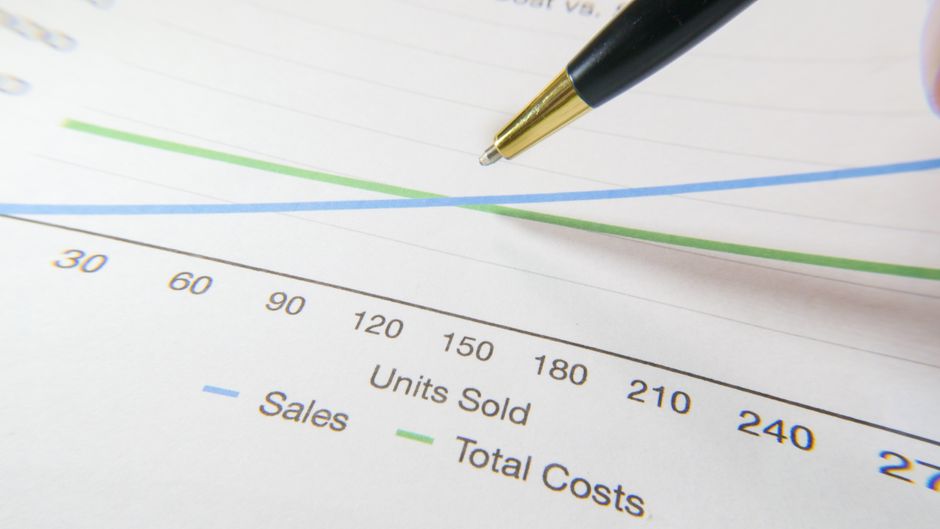
The graph of cost-per-acquisition over time tells the story most clearly. PPC maintains a relatively flat line (assuming consistent campaign management), while GEO displays a downward trajectory that eventually plateaus at significantly lower levels. Understanding where your business falls on this timeline – and whether you can sustain losses during the ramp-up phase – determines which strategy makes financial sense.
Examining Traffic Quality and Conversion Rate Differentials
Raw traffic volume alone never tells the full story. A business receiving 100 PPC clicks that convert at 8% generates eight leads. Another receiving 150 organic search clicks that convert at 12% generates eighteen leads – more than double. Yet the PPC business might have invested £400 total while the organic business invested £2,500. The conversion rate differential dramatically affects the true return calculation.
Traffic quality differences emerge from the intent signals embedded in each channel. A user typing a query into Google and clicking a paid search result typically exhibits lower purchase intent than a user discovering your content within a Google AI Overview – they’re actively seeking the exact solution your content addresses. This quality differential shows up consistently in conversion rate data.
Consider how each search experience creates different user psychology. PPC ads attract users in the early research phase, often comparing multiple options simultaneously. They’ve seen your headline and value proposition in 160 characters, which creates different expectations than users who’ve read your full article and decided to click deeper. This distinction partly explains why organic search typically shows better conversion rates.
The following factors affect conversion rate differentials between channels:
- Search intent maturity – GEO typically attracts users further along the decision journey
- Content relevance – users finding your detailed content convert better than those seeing short ad copy
- Trust signals – appearing in organic results and AI Overviews carries different credibility than paid placements
- Landing page alignment – organic users have context that PPC users lack, reducing friction
- Industry type – B2B services show larger GEO conversion advantages; e-commerce shows smaller differentials
- Audience familiarity with brands – unknown brands benefit more from PPC’s immediate visibility; established brands benefit from organic’s credibility signals
Data from HubSpot’s 2024 State of Inbound Marketing report indicates that UK businesses averaging across all sectors report 4.5% conversion rates for PPC traffic and 6.8% conversion rates for organic search traffic. Within that aggregate, however, sits an enormous range – B2B professional services report 8-12% conversion rates for organic while e-commerce averages 2-3% for organic.
This quality metric becomes your most important variable when calculating true ROI. A PPC strategy generating £5,000 in revenue from £1,000 in ad spend (5:1 ROAS) appears superior to a GEO strategy generating £6,000 from £2,000 in spend (3:1 ROAS) until you factor in that the PPC investment must repeat monthly while the GEO investment doesn’t scale proportionally.
Calculating Long-Term ROI: The Three-Year Financial Projection
The most useful financial comparison extends across three full years because neither strategy reaches equilibrium within months. By year three, the cumulative financial picture reveals the true winner for most UK businesses.
Imagine a mid-market business investing equally in both channels – £4,000 monthly for thirty-six months. The PPC strategy invests £144,000 total and generates consistent results throughout (let’s assume £12,000 monthly in revenue). The GEO strategy invests £144,000 total but shows a different curve: month one through four generates minimal revenue (£1,000-£2,000 monthly), months five through twelve generates increasing revenue (£4,000-£8,000 monthly), and months thirteen through thirty-six generates substantial revenue (£10,000-£14,000 monthly).
| Time Period | PPC Total Investment | PPC Total Revenue | PPC Cumulative ROI | GEO Total Investment | GEO Total Revenue | GEO Cumulative ROI |
|---|---|---|---|---|---|---|
| Year 1 (12 months) | £48,000 | £144,000 | 200% | £48,000 | £60,000 | 25% |
| Year 2 (24 months) | £96,000 | £288,000 | 200% | £96,000 | £180,000 | 87.5% |
| Year 3 (36 months) | £144,000 | £432,000 | 200% | £144,000 | £336,000 | 133% |
This projection illustrates why business leaders often feel torn between the approaches. PPC delivers superior ROI in year one – a critical factor for businesses with quarterly performance reviews or limited runway. GEO catches up in year two and surpasses PPC significantly by year three.
The decision framework becomes clearer through this lens: choose PPC if your business operates with twelve-month or shorter planning horizons, or if you lack financial resources to sustain initial GEO investment without immediate returns. Choose GEO if you have the financial stability to invest for three years while the strategy matures, or if your competitive landscape requires the improved cost-per-acquisition that GEO eventually delivers.
Many successful UK businesses actually employ both simultaneously, using this distinction strategically: PPC handles immediate demand capture while GEO builds the infrastructure that eventually reduces reliance on paid advertising. This hybrid approach requires budget but provides both immediate revenue and long-term competitive advantage.
The three-year projection also reveals an important secondary benefit of GEO: reduced financial volatility. PPC spending fluctuates with keyword competition and seasonal demand shifts, creating unpredictable monthly costs. GEO spending remains more stable, allowing more accurate financial forecasting. This predictability often justifies higher initial investment for CFOs managing quarterly budgets.
Industry-Specific ROI Variations and Strategic Implications
Raw averages mislead because industries diverge dramatically in their cost structures and dynamics. A legal services firm faces entirely different PPC and GEO economics than a fitness studio or a technology company.
Legal services represent the highest-cost PPC environment in the UK. Competitive keywords like “personal injury solicitor London” average £15-£25 per click, while “family law solicitor Manchester” still commands £8-£15 per click. A law firm spending £5,000 monthly on PPC might generate only 250-400 clicks, perhaps converting to 15-20 leads. For law firms, GEO’s superior cost-per-lead economics become compelling because the alternative – paying premium PPC rates indefinitely – strains budgets severely.
E-commerce presents the opposite scenario. Average PPC costs remain lower (£1.50-£4.00 per click), but conversion rates are also lower (2-4%), meaning a £3,000 monthly PPC investment might generate £9,000 in revenue. GEO takes longer to achieve competitive advantages in e-commerce because search intent for product queries differs from service queries – users searching “blue running shoes” want product listings, not detailed blogs. This favors the immediate visibility that PPC provides.
Consider these industry-specific factors:
- Legal services – highest PPC costs, strong GEO advantage after six months, extremely high customer lifetime value justifies premium positioning efforts
- Financial services – very high PPC costs (£10-£20 per click), strong regulatory constraints on claims, GEO reduces advertising scrutiny – significant GEO advantage
- B2B SaaS – moderate PPC costs (£3-£8 per click), long sales cycles favor GEO’s authority-building approach, strong GEO advantage
- E-commerce – lower PPC costs, lower organic conversion rates, faster decision cycles favor PPC, slight PPC advantage
- Local services (plumbers, electricians) – moderate PPC costs (£2-£6 per click), strong local search advantages for GEO, strong GEO advantage
- Healthcare – very high PPC costs, extreme brand sensitivity, strong GEO regulatory advantages, strongest GEO advantage
Your industry positioning fundamentally affects which strategy makes financial sense. A healthcare provider in the UK cannot afford to rely on PPC at £15+ per click indefinitely, making GEO’s investment more palatable. An e-commerce business with 3% margins cannot stomach months of GEO ramp-up without PPC backing up the revenue stream.
The strategic implication: evaluate not just the national average ROI figures but the specific cost structures and conversion patterns within your industry vertical. Speaking with competitors in your sector – or working with agencies experienced in your vertical – provides essential context that generic analyses cannot.
Hidden Costs and Often-Overlooked Financial Factors in Both Strategies
Most cost comparisons between GEO and PPC focus on obvious expenses: ad spend and agency fees. Beneath the surface sit numerous hidden costs that substantially affect true ROI calculations.
PPC hidden costs include:
- Landing page optimization and testing – continuous refinement requires either in-house developers (salary cost) or agency fees (£500-£2,000 monthly)
- Conversion rate optimization specialists – improving 3% conversion to 4% conversion might employ someone at £40,000+ annual salary
- Analytics infrastructure and tools – tracking pixels, UTM management, platform integration tools add £100-£500 monthly
- Creative development – consistent ad copy testing and design updates (£300-£1,000 monthly for professional work)
- Auction competition adjustments – algorithm changes requiring constant bid management attention
- Attribution modeling – understanding true ROAS across multiple touchpoints requires investment
GEO hidden costs include:
- Content marketing infrastructure – tools like SEMrush, Ahrefs, Moz cost £100-£300 monthly per tool
- Technical implementation – ensuring content aligns with Google’s AI preferences requires ongoing technical work
- Content updating cycles – published content requires periodic refreshing (5-10% of original creation cost annually)
- Competitive monitoring – tracking how competitors position similar content requires manual or tool-assisted work
- Brand building activities – authority signals often require investment in additional visibility (sponsorships, partnerships)
- Training and education – staff upskilling on GEO principles versus traditional SEO optimization
A study by Content Marketing Institute (2024) found that businesses underestimate true content marketing costs by an average of 35%, usually because they fail to account for hidden coordination, revision, and promotion expenses beyond the initial content creation fee.
These hidden costs don’t invalidate either approach – they simply alter the financial reality. A business calculating PPC ROI at 250% while ignoring £1,500 monthly in CRO specialist salaries has actually calculated 180% ROI (still positive, but materially different). The same applies to GEO businesses ignoring content update costs.
For precise ROI comparisons, develop comprehensive cost accounting that includes all internal time investment, third-party tools, talent acquisition, and indirect costs. This typically reveals that total investment in either strategy runs 20-40% higher than the direct ad spend or agency fees alone.
Making the Strategic Choice: Frameworks for UK Businesses
Having examined costs, conversion rates, timelines, and industry variations, how should UK businesses actually decide? The choice rarely involves pure financial optimization – strategic, operational, and competitive factors often matter more.
Choose PPC as your primary strategy if your business matches these criteria:
- You need customer acquisition within the next 60 days or face financial pressure
- Your average customer value is high enough to support premium cost-per-acquisition (above £150 typically)
- You operate in a competitive market where visibility windows close quickly (e.g., specific sales events or seasons)
- Your product or service experiences volatile demand with unpredictable peaks
- You lack internal content creation capability and prefer to outsource to agencies with proven PPC expertise
- Your industry has lower PPC costs because of less competition (niche verticals, location-specific services)
- You want precise control over budget and can stop or start campaigns without organizational friction
Choose GEO as your primary strategy if your business matches these criteria:
- You have 18-36 months of financial runway or cash flow allowing patient investment
- Your competitive landscape includes larger well-capitalized competitors with unlimited PPC budgets
- You want to build lasting competitive advantages rather than renting visibility
- You operate in a vertical with high PPC costs (legal, financial services, healthcare)
- Your team has or can develop strong content creation capability
- You value predictable, stable monthly costs over variable auction-based pricing
- You want your marketing to compound in value over time rather than reset monthly
Many UK businesses choose a hybrid approach: allocate 60-70% of budget to GEO strategy while running limited PPC campaigns to validate demand and fill gaps while organic search visibility builds. This balances the need for immediate results against the long-term financial advantages of GEO.
Your choice should ultimately reflect your financial situation, competitive positioning, and strategic timeline rather than industry average data alone. Understanding the fundamentals – costs, ROI curves, industry variations, and hidden expenses – enables that choice rather than determining it.
FAQ: GEO vs PPC Cost and ROI Questions
How long does it take for GEO to outperform PPC financially?
Most UK businesses see GEO catch up to PPC in revenue generation between months 12-18, with clear financial advantage appearing by month 24. However, this assumes consistent investment, competent strategy execution, and realistic baseline expectations. Faster outcomes occur in lower-competition niches; slower outcomes occur in saturated verticals like e-commerce or financial services. The honest answer: plan for 18-24 months before making comparative judgments. Some businesses see advantage at month nine; others need 30 months. Your industry, competition level, and content quality determine the specific timeline. Understanding GEO versus AI search strategies provides additional context on competitive positioning during this ramp-up period.
Can I do both PPC and GEO simultaneously on a tight budget?
Yes, but with significant tradeoffs. Allocate 70% of budget to your primary strategy (whichever matches your situation) and 30% to the secondary approach. For most UK businesses, this means 70% GEO and 30% PPC, using PPC to validate demand while GEO builds. Alternatively, run PPC continuously while investing in GEO during slower business periods. The worst approach: splitting budget 50-50, which prevents either strategy from reaching critical mass. You’ll spend £2,000 monthly on each (£4,000 total) and get mediocre results from both rather than excellent results from one. Commitment to a primary strategy, even while testing the secondary, produces better outcomes than equal allocation.
What’s included in typical agency fees for GEO versus PPC?
PPC agencies typically charge 10-20% of ad spend plus a management fee (£500-£2,000 monthly) for campaign optimization, reporting, and strategy adjustment. On a £3,000 monthly ad spend, expect £800-£1,400 in agency fees. GEO agencies typically charge £2,000-£5,000 monthly retainers based on project scope, or project-based fees of £8,000-£20,000 for comprehensive content strategy. Some agencies charge hourly (£75-£200 per hour) for flexible engagement. GEO fees often feel higher initially but distribute costs across longer timelines, while PPC fees layer on top of ad spend, compounding total investment rapidly. Request itemized breakdowns that distinguish between strategy/optimization work and tooling costs to understand actual value delivery.
How do I know if my conversion rates are typical for my industry?
Benchmark conversion rates vary dramatically: B2B SaaS typically converts at 3-5% for both PPC and organic; legal services convert at 8-15% for organic and 2-4% for PPC; e-commerce converts at 2-4% for both (slightly higher for organic); healthcare converts at 5-10% for both. These figures come from anonymized data aggregated across thousands of accounts. Your actual rates depend on execution quality, audience targeting precision, messaging clarity, and competitive positioning. Use Google Analytics 4 (GA4) to segment conversions by source and compare your rates against industry benchmarks published by agencies or your peers. Significant underperformance might indicate either campaign quality issues or inappropriate audience targeting rather than inherent channel limitations.
What happens to my visibility if I stop paying for PPC or stop investing in GEO?
Stop PPC: Your ads disappear from search results within hours. Traffic immediately ceases. This is the primary risk of PPC – visibility completely stops without ongoing payment. Stop GEO: Your content remains indexed and continues generating traffic, though visibility typically declines gradually over months as algorithms refresh and competitors’ newer content gains advantage. Some content maintains visibility for years; some loses relevance within months depending on topic and competitive landscape. This fundamental difference – GEO’s persistence versus PPC’s dependency – explains why many businesses view GEO as building assets while PPC represents renting visibility. Practically, most businesses continue some level of investment in both because abandoning either completely creates visibility gaps.
Should I choose GEO or PPC based on my team’s existing capabilities?
Honestly? Yes, this matters more than pure financial calculations. A team strong in paid advertising can execute excellent PPC campaigns that generate strong ROI even if GEO is theoretically superior for your industry. Conversely, a team with strong content development capability can build GEO advantage faster than an agency would because of contextual knowledge and internal efficiency. Many businesses underinvest in their weaknesses when they could maximize their strengths. If you have talented copywriters and researchers, prioritize GEO. If you have experienced paid media strategists, prioritize PPC. You can always expand to the secondary channel once your primary strategy reaches mature performance. Building strength in your natural capability area compounds faster than fighting against organizational weakness.
Moving From Analysis to Implementation: Taking Action on Your ROI Strategy
Understanding the financial dynamics between GEO and PPC means little without translation into actual business decisions and implementation. The analysis you’ve reviewed provides the framework – now you need specifics for your situation.
Begin by conducting a honest financial audit of your current marketing. If you’re already running PPC, examine your actual ROAS, cost-per-lead, and customer acquisition cost across the past twelve months. These real numbers – not industry averages – form your starting point. Compare them against your goals and against what you’d need from GEO to justify switching or expanding investment. If PPC is already generating 250% ROI and your business scales efficiently with those results, perhaps GEO serves as a supplementary strategy rather than a replacement.
If you’re considering GEO, map out your industry’s specific cost structures. Contact three agency partners and ask them directly: what’s typical for my industry in terms of initial investment, timeline to positive ROI, and monthly ongoing costs? Request references from businesses similar to yours. Speak with those references candidly about their experience and results. This direct research provides better guidance than this article or any generic analysis.
Next, assess your organization’s capacity for patient investment. GEO genuinely requires sustained commitment through the maturation phase. If your board or leadership changes strategy quarterly based on vanity metrics, GEO probably isn’t right for you. If your business survives on quarterly revenue targets, build in PPC during the GEO ramp-up phase rather than expecting GEO alone to sustain operations.
Consider whether you’re making this choice in isolation or whether it should coordinate with broader strategic direction. Are you building brand authority in your market? GEO accelerates that. Are you launching a new product requiring rapid customer feedback? PPC validates demand faster. Are you competing against well-capitalized larger competitors? GEO reduces your reliance on expensive keyword auctions. The choice between GEO and PPC shouldn’t exist separately from your competitive positioning, customer acquisition strategy, and financial structure.
If you’re operating across multiple regions or need localized strategy, contact our team at GEO services in Birmingham or other UK cities to discuss how regional competitive dynamics affect your choice. Local search patterns and competition vary enough that what works in one city might require different strategy in another.
Finally, commit to measuring whatever path you choose. Establish baseline metrics before you start: current customer acquisition cost, monthly acquisition volume, conversion rates by channel, customer lifetime value, and sales cycle length. Track these monthly, and evaluate whether your chosen strategy (GEO, PPC, or hybrid) is actually delivering the financial results you projected. Markets change, competitive dynamics shift, and what appears optimal in theory sometimes underperforms in practice.
The businesses succeeding in 2026 are not those that made a perfect choice between GEO and PPC based on macro analysis. They’re the ones that measured real results in their specific context, adapted when data contradicted initial assumptions, and committed to mastery in their chosen approach rather than constantly second-guessing their strategy. Your financial analysis provides the framework – your execution and willingness to learn from actual results determine whether GEO, PPC, or a hybrid approach actually delivers the ROI you need.


